
Carpets collect dust, dirt, food spills, and stains over time, even when you vacuum them regularly. While routine cleaning helps maintain their appearance, it may not remove dirt trapped deep within the fibres. This is why many homeowners consider professional carpet cleaning.
Two commonly used options are steam cleaning and shampoo cleaning. Both can improve carpet cleanliness, but they work differently and produce different results.
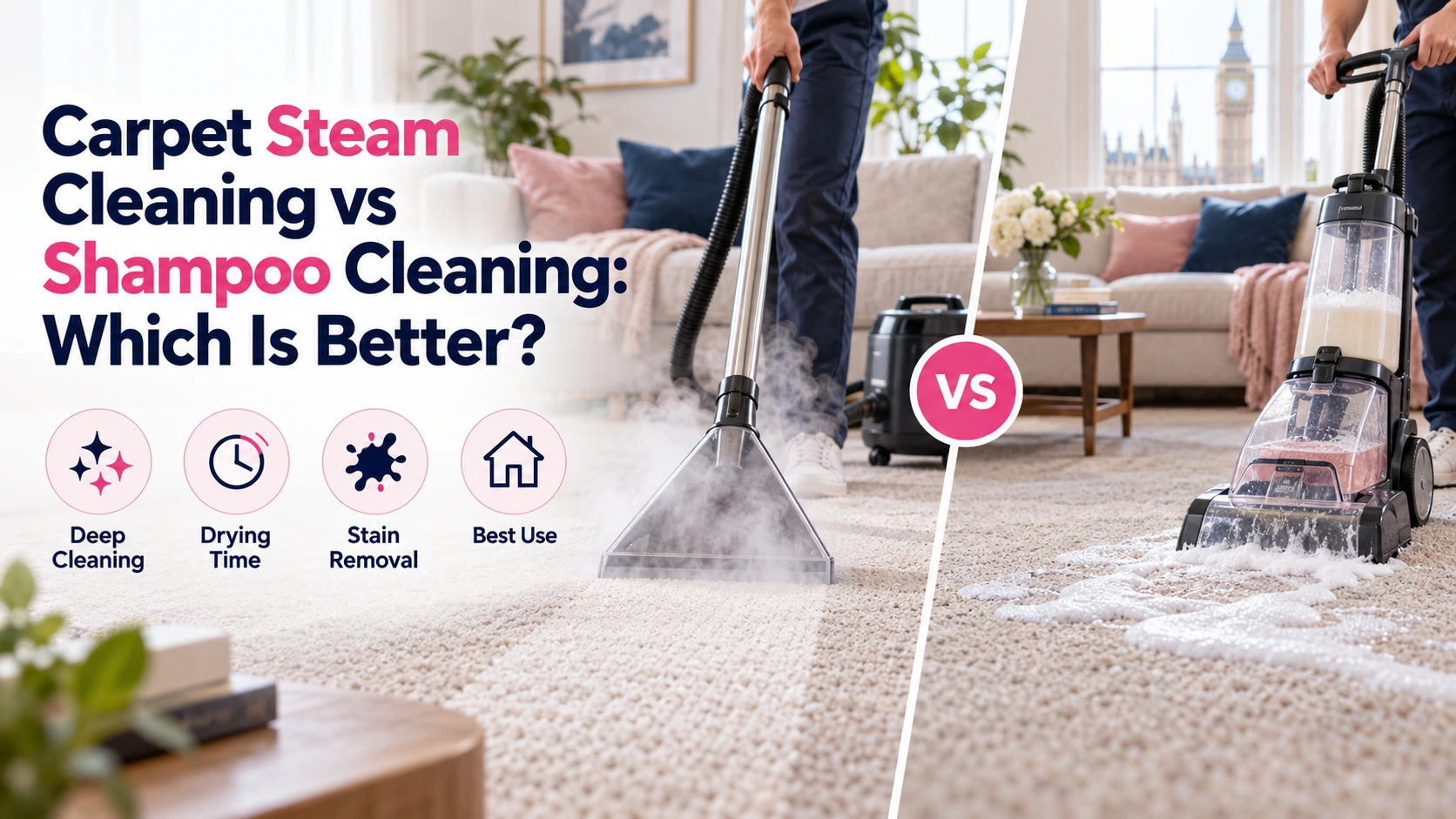
When comparing carpet steam cleaning vs shampoo, it is important to understand how each method removes dirt, how long carpets take to dry, and which treatment suits your carpet material. This guide explains the main differences and helps you choose the right cleaning method for your home.
What Is Carpet Steam Cleaning?
Steam carpet cleaning, also known as hot water extraction, is a cleaning method that uses heated water, suitable cleaning solutions, and powerful suction to remove dirt from carpet fibres. Despite its name, the process mainly uses hot water rather than steam alone.
During cleaning, heated water and a cleaning solution are applied to the carpet to loosen dirt and stains. A powerful extraction machine then removes the dirty water along with much of the cleaning solution. This process helps remove soil trapped within the carpet fibres instead of simply cleaning the visible surface.
Steam carpet cleaning is commonly recommended for carpets with heavy foot traffic, embedded dust, and everyday stains. However, the results depend on the carpet material, cleaning equipment, and condition of the fibres.
What Is Carpet Shampoo Cleaning?
Carpet shampoo cleaning uses a specially formulated cleaning solution to loosen dirt from carpet fibres. The shampoo is applied using a brush or cleaning machine, which works the product into the carpet pile to break down accumulated dirt.
Once the dirt has been loosened, the shampoo and soil are removed through extraction or another suitable cleaning process. Some shampooing systems require the carpet to dry before the remaining residue is vacuumed away.
This method can be useful for carpets with visible surface dirt and certain stains. However, if the shampoo is not properly removed, detergent residue may remain inside the fibres. Over time, this residue can attract additional dirt and make the carpet look dirty again.
Carpet Steam Cleaning vs Shampoo: Key Differences
Although both techniques are designed to clean carpets, their processes and results are different. Understanding these carpet cleaning methods can help homeowners choose the right treatment.
| Comparison | Steam Cleaning | Shampoo Cleaning |
| Cleaning process | Heated water and extraction | Shampoo, brushing, and residue removal |
| Cleaning depth | Generally effective for deeper dirt | Often focuses on surface and pile dirt |
| Stain removal | Effective for many common stains | Useful for certain surface stains |
| Detergent residue | Usually lower with proper extraction | May remain without thorough removal |
| Drying time | Usually several hours | Depends on moisture and extraction |
| Best suited for | Thorough carpet cleaning | Surface cleaning and suitable carpet types |
Cleaning Depth and Dirt Removal
One of the biggest differences is how effectively each method removes accumulated dirt.
Steam cleaning uses hot water extraction to loosen and remove particles trapped within carpet fibres. This makes it particularly suitable for heavily used carpets or those that have not received professional cleaning for a long time.
Shampoo cleaning mainly uses detergent and mechanical brushing to loosen dirt. Although it can improve the appearance of a carpet, some shampooing systems may be less effective at removing deeply embedded soil.
For thorough carpet cleaning, steam cleaning is generally the preferred option.
Stain Removal and Cleaning Results
Both cleaning methods can help treat stains caused by food, drinks, muddy footprints, and everyday use. However, the results depend on the type of stain and how long it has remained in the carpet.
Steam cleaning combines heated water, cleaning products, and extraction to remove many common stains. Shampoo cleaning relies on detergents and brushing, which can be effective for selected surface stains.
Neither method guarantees complete stain removal. Older stains, permanent discolouration, and damage to carpet fibres may remain even after professional cleaning.
Drying Time After Cleaning
Drying time is important, especially when you need to use your rooms again shortly after cleaning.
Professionally steam-cleaned carpets commonly take around 4 to 6 hours to dry, although thicker carpets or poorly ventilated rooms may take longer. The extraction equipment removes much of the water during the cleaning process.
Shampoo-cleaned carpets may also take several hours to dry. If too much cleaning solution is used or moisture is not properly removed, drying can take longer.
Regardless of the method, good ventilation helps carpets dry more efficiently.
Cleaning Products and Residue
Steam cleaning generally removes much of the cleaning solution with the extracted dirty water. When performed correctly, this helps reduce detergent buildup.
With carpet shampoo cleaning, some detergent may remain if the carpet is not properly rinsed or extracted. Leftover shampoo can attract dust and dirt, reducing the benefits of cleaning.
For this reason, choosing a suitable cleaning process and ensuring proper residue removal are important for maintaining carpet cleanliness.
Which Carpet Cleaning Method Is Better for Your Home?
The best option depends on your carpet’s material, condition, and the type of cleaning required. Neither method is automatically suitable for every carpet.
When Should You Choose Steam Cleaning?
Steam cleaning is generally suitable when carpets have accumulated dirt from everyday use or need a more thorough clean. It can be particularly helpful for carpets in living rooms, hallways, and other areas with frequent foot traffic.
Steam carpet cleaning is also a practical option when preparing a property for new occupants or refreshing carpets that have not been professionally cleaned for several months.
However, the carpet material must be suitable for hot water extraction. Delicate fibres may require alternative treatments.
When Should You Choose Shampoo Cleaning?
Shampoo cleaning may be appropriate when carpets have visible surface dirt and the material can tolerate brushing and detergent treatment.
It can also be considered when a professional cleaner recommends it for a particular carpet type or cleaning requirement. However, removing the shampoo thoroughly is essential to prevent residue buildup.
For most standard household carpets requiring deep cleaning, hot water extraction is generally the more practical choice.
Need help removing accumulated dirt from your carpets? Contact Urban End of Tenancy Cleaning to discuss your carpet condition and request a quote for professional carpet cleaning in London.
Is Steam Cleaning Safe for Every Carpet Type?
Not every carpet should be cleaned using hot water extraction. Different carpet materials react differently to heat, moisture, cleaning solutions, and mechanical brushing.
Many synthetic carpets can tolerate professional hot water extraction when the correct equipment and products are used. However, some natural fibres, delicate rugs, and specialist carpets require greater care. Materials such as sisal and jute can be particularly sensitive to excessive moisture.
Before choosing between steam cleaning and shampooing, check the manufacturer’s care instructions. A professional cleaner should assess the material and select a suitable method to reduce the risk of shrinkage, colour changes, or fibre damage.
DIY Carpet Cleaning vs Professional Carpet Cleaning
Homeowners can hire carpet cleaning machines or use household shampoo products to treat minor stains. These options may be convenient for small areas, but they require careful use.
Applying excessive water or detergent can leave carpets damp or cause residue to collect within the fibres. Inadequate extraction may also affect the final cleaning results.
Professional cleaners use equipment designed to apply cleaning solutions and extract moisture more effectively. They can also assess stains, identify carpet materials, and recommend suitable treatments.
If your carpets cover several rooms or contain stubborn stains, professional cleaning may save time and reduce the risk of using unsuitable products.
Which Method Is Better for End of Tenancy Carpet Cleaning?
Carpet cleanliness is an important consideration when moving out of a rented property in London. Landlords and letting agents generally expect tenants to return the property in an appropriately clean condition, allowing for fair wear and tear.
Steam cleaning is often suitable for carpets with accumulated dirt because hot water extraction can remove soil from within the fibres. However, professional cleaning is not automatically required for every tenancy. The property’s original condition and applicable tenancy obligations should be considered.
Before arranging cleaning, check your inventory report and assess whether the carpets need specialist treatment.
Moving out of your rented property? Urban End of Tenancy Cleaning provides end of tenancy cleaning services in London. Contact the team to discuss your carpet cleaning requirements and arrange a suitable cleaning appointment.
How Often Should You Professionally Clean Your Carpets?
For many households, professional carpet cleaning every 6 to 12 months can be a useful maintenance schedule. However, the ideal frequency depends on carpet usage, household activity, and the manufacturer’s recommendations.
Homes with children, pets, or frequent visitors may require more regular cleaning. Carpets in bedrooms or lightly used rooms may need less frequent professional attention.
Between professional appointments, vacuum regularly and clean spills promptly. These simple habits help prevent dirt buildup and maintain the appearance of your carpets.
Book Professional Carpet Cleaning Services in London
When comparing carpet steam cleaning vs shampoo, steam cleaning is generally the better option for removing embedded dirt and achieving a thorough clean. Shampoo cleaning can still be useful for suitable carpets, particularly when visible surface dirt is the main concern.
Ultimately, the right method depends on your carpet’s material, condition, and cleaning needs.
Urban End of Tenancy Cleaning offers professional carpet cleaning services in London for homeowners, tenants, and landlords looking to maintain cleaner carpets.
Ready to refresh your carpets? Visit Urban End of Tenancy Cleaning to discuss your requirements, request a personalised quote, and book a convenient carpet cleaning appointment.
FAQs About Carpet Steam Cleaning vs Shampoo Cleaning
1. Is steam cleaning better than shampooing carpets?
Steam cleaning is generally better for removing embedded dirt because hot water extraction cleans within carpet fibres. Shampoo cleaning can help remove visible surface dirt, but proper detergent removal is important.
2. How long does a carpet take to dry after steam cleaning?
Carpets commonly take around 4 to 6 hours to dry after professional steam cleaning. Drying time varies depending on carpet thickness, ventilation, and the amount of moisture remaining.
3. Does carpet shampooing leave residue?
Carpet shampooing can leave detergent residue when the cleaning solution is not thoroughly removed. Proper extraction or rinsing helps reduce buildup and prevents dirt from collecting too quickly.
4. Can steam cleaning remove old carpet stains?
Steam cleaning can remove or reduce many stains, but results depend on the stain type, age, and carpet material. Some stains may cause permanent discolouration and cannot be removed completely.
5. Is steam cleaning suitable for wool carpets?
Some wool carpets can be cleaned using carefully controlled hot water extraction. However, temperature, moisture, and cleaning products must be suitable for the fibres. Always check the carpet manufacturer’s care instructions.