
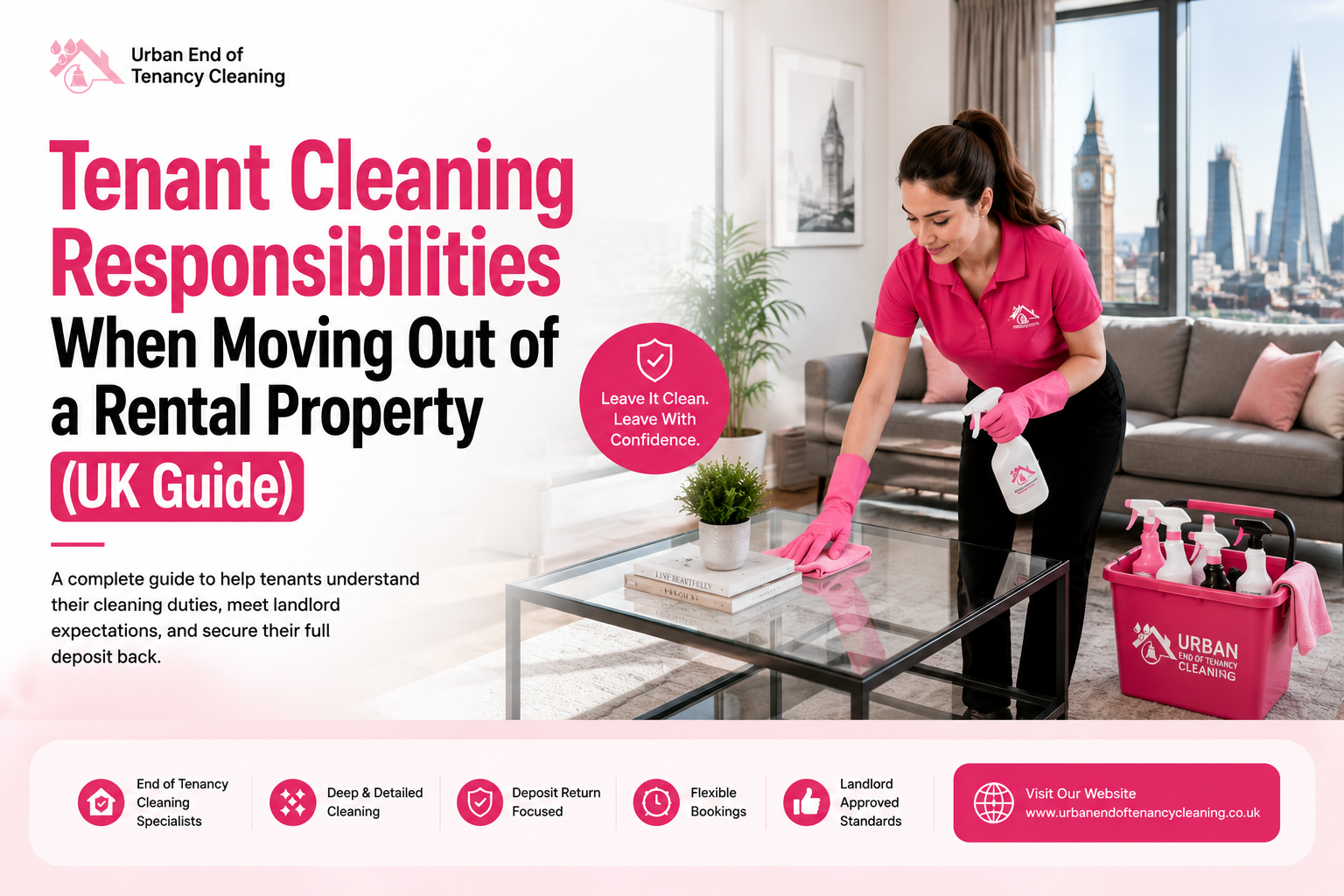
Moving out of a rented home is stressful enough without worrying about whether you’ll get your deposit back. Understanding your tenant cleaning responsibilities UK law expects you to meet is the single biggest factor in avoiding disputes with your landlord or letting agent.
This guide breaks down exactly what tenants are required to clean, what landlords can and can’t charge for, and how to leave your property in a condition that protects your deposit in full.
What Are Tenant Cleaning Responsibilities UK Tenants Must Know
Under most UK tenancy agreements, tenants are expected to return the property in the same state of cleanliness it was in at the start of the tenancy, allowing for reasonable wear and tear. This is usually confirmed by comparing the move-out condition against the original inventory report signed when you moved in.
Your end of tenancy cleaning responsibilities typically cover:
- All rooms, including kitchen, bathroom, bedrooms and living areas
- Carpets, floors and skirting boards
- Windows (interior) and window sills
- Kitchen appliances such as ovens, hobs and extractor fans
- Removal of all personal belongings and rubbish
- Limescale removal from bathroom fixtures and taps
Fair wear and tear — such as minor carpet fading or small scuff marks from normal daily use — is not something you’ll usually be charged for. However, ground-in dirt, grease build-up, or neglected cleaning is a different matter entirely, and this is where most deposit disputes begin.
End of Tenancy Cleaning Responsibilities Explained Room by Room
Breaking your responsibilities down by room makes the task far less overwhelming and ensures nothing gets missed during your final inspection.
Kitchen
The kitchen is usually the area landlords scrutinise most closely. You’re expected to degrease the oven inside and out, clean the hob and extractor fan filters, wipe down all cupboard fronts and interiors, descale the kettle, and clean the fridge and freezer (defrosted, unplugged and left slightly open). Worktops, splashbacks and the sink should be left free of stains and limescale.
Bathroom
Limescale on taps, showerheads and tiles is one of the most common reasons deductions are made. A thorough clean should include the toilet, bath, shower screen, tiles, grout, mirrors and extractor fan.
Bedrooms and Living Areas
These rooms generally require lighter cleaning — dusting surfaces, wiping skirting boards, cleaning windows and window sills, and vacuuming or mopping floors. Carpets should be vacuumed thoroughly, and if there are stains beyond normal wear, professional carpet cleaning may be necessary.
Hallways, Stairs and Communal Areas
Don’t overlook these spaces. Skirting boards, light switches, door handles and stair carpets often collect dust and marks that inspectors will note.
Tenant Cleaning Checklist UK Renters Should Follow Before Handover
A structured tenant cleaning checklist UK landlords typically expect includes:
- Dust and wipe all surfaces, shelves and skirting boards
- Clean inside and outside of all kitchen appliances
- Descale taps, showerheads and kettle
- Clean windows, sills and frames (interior)
- Vacuum and, if needed, professionally clean carpets
- Mop hard floors throughout
- Remove all rubbish and personal items
- Wipe down radiators and light fittings
- Clean inside wardrobes, cupboards and drawers
- Check for cobwebs in corners and ceiling edges
Working through a checklist methodically — rather than tackling rooms at random — is the most efficient way to avoid missing anything the check-out inventory clerk will be looking for.
If you’d like a more detailed, printable version, this end of tenancy cleaning checklist for London tenants covers every room in far greater depth.
Cleaning Rental Property Before Moving Out: A Step-by-Step Approach
When it comes to cleaning rental property before moving out, timing and order matter. Follow this sequence for best results:
Step 1: Declutter first. Remove all furniture, boxes and personal items before you start cleaning — it’s far easier to clean an empty room properly.
Step 2: Work top to bottom. Dust light fittings and shelves before vacuuming, so debris falls onto floors you’ll clean last.
Step 3: Tackle the kitchen and bathroom early. These take the longest and involve the most scrubbing, so start while you have energy and time.
Step 4: Deep clean carpets last. Once every other task is complete, vacuum thoroughly and consider a professional steam clean if carpets show visible staining or odours.
Step 5: Do a final walkthrough. Compare the property against your original check-in inventory and photos, checking every room against your checklist before handing back the keys.
If your tenancy agreement or letting agent set out specific expectations that weren’t mentioned when you signed, it’s worth reviewing this guide on handling cleaning requirements not communicated by the letting agent beforehand, so you know where you stand.
Can Landlord Charge for Cleaning UK Rules Actually Allow?
This is one of the most searched questions among renters, and the answer depends entirely on the condition of the property at check-out versus check-in.
Can landlord charge for cleaning UK law permits it — but only under specific conditions:
- The property must have been professionally cleaned at the start of the tenancy (evidenced by receipts or the inventory report)
- The cleaning required must go beyond fair wear and tear
- The charge must be proportionate to the actual cost of restoring the property to its original condition
- The landlord cannot charge for a “brand new” standard if the property wasn’t in that condition when you moved in
Landlords cannot simply charge a flat cleaning fee regardless of the property’s actual state — this practice has been successfully challenged many times through deposit protection scheme adjudications.
For a closer look at exactly when a deduction is and isn’t justified, see this breakdown of the rules for deducting cleaning costs from a tenant’s deposit. If a dispute arises, evidence is everything: dated photographs, the original inventory, and receipts for any cleaning you arranged yourself will support your case.
End of Tenancy Cleaning and Deposit: How the Two Are Connected
The link between end of tenancy cleaning and deposit returns is direct and well documented. According to deposit protection scheme data, cleaning is consistently one of the top three reasons landlords raise disputes, alongside damage and unpaid rent.
To protect your deposit:
- Keep dated photos of the property both before you move in and after you clean at the end
- Retain any receipts if you hire professional cleaners
- Request a check-out inspection alongside the landlord or agent wherever possible
- Refer back to the original inventory report to confirm what condition is genuinely expected
Deposits are legally required to be held in a government-approved protection scheme, and any deduction the landlord proposes must be clearly justified with evidence.
If you disagree with a proposed deduction, you have the right to dispute it through the scheme’s free resolution service rather than accepting it automatically.
Common Mistakes Tenants Make When Cleaning Before Moving Out
Even conscientious tenants lose part of their deposit due to avoidable errors:
- Leaving the oven until last minute — grease build-up takes far longer to remove than tenants expect
- Forgetting extractor fan filters, which trap grease and dust over months
- Assuming a quick tidy is enough — landlords compare against the original inventory, not general tidiness
- Not photographing the finished result, leaving no evidence if a dispute later arises
- Underestimating carpet cleaning time, especially in high-traffic areas like hallways and stairs
Should You Hire Professional Cleaners?
Many tenants weigh up doing the clean themselves against hiring professionals. A professional end of tenancy clean typically comes with an invoice and, in many cases, a re-clean guarantee if the landlord isn’t satisfied — both of which offer useful protection during a deposit dispute.
This look at whether hiring professional end of tenancy cleaners makes financial sense weighs up the costs against the deposit amount typically at risk, which is worth reading before deciding either way.
Final Thoughts
Meeting your cleaning obligations at the end of a tenancy isn’t about achieving perfection — it’s about matching the standard set out in your original inventory and leaving the property free of anything beyond fair wear and tear.
Working through a structured checklist, documenting your results with photos, and understanding exactly what a landlord can and cannot charge for will put you in the strongest possible position to get your full deposit back without unnecessary disputes or last-minute stress.
Frequently Asked Questions
1. Do I have to professionally clean the property before moving out?
Not always — it depends on your tenancy agreement. If the property was professionally cleaned before you moved in, many agreements expect you to return it to the same standard, which often means arranging a professional clean yourself. If you cleaned it yourself at check-in, a thorough DIY clean is usually acceptable, provided it meets the same standard.
2. What counts as fair wear and tear?
Fair wear and tear covers gradual deterioration from normal daily living — faded paint, slightly worn carpet in high-traffic areas, or minor marks on walls. It does not cover stains, grease build-up, mould from poor ventilation habits, or damage caused by neglect.
3. How long does an end of tenancy clean usually take?
For a one or two-bedroom flat, a thorough clean typically takes between four and six hours. Larger properties, or homes that haven’t been deep cleaned in a while, can take considerably longer — particularly if the kitchen and carpets need extra attention.
4. Can I dispute a cleaning charge after moving out?
Yes. If your deposit is protected in a government-approved scheme, you can raise a formal dispute if you believe a cleaning deduction is unfair or unsupported by evidence. Photos, receipts and the original inventory report are the strongest evidence you can provide.
5. What’s the difference between moving-out cleaning and regular cleaning?
Regular cleaning maintains a property day to day, while end of tenancy cleaning is a deep, comprehensive clean covering areas that aren’t part of a normal routine — inside appliances, behind furniture, extractor fans, and limescale removal. Tenants sometimes underestimate just how much more thorough this level of clean needs to be compared with a weekly tidy-up.